Positioning modes
DL / UL-TDoA · 2D / 3D / Configure roles for phones and asset tags according to available capabilities
Combine DL-TDoA phone positioning and UL-TDoA asset tags for retail guidance, museums and industrial tracking.
DL / UL-TDoA · 2D / 3D / Configure roles for phones and asset tags according to available capabilities
4 anchors / Single-zone prototype starting point; production count follows blockage and redundancy design
PoE / LAN / Power, synchronization and backhaul depend on project configuration
2D / 3D coordinates and status / Accuracy, update rate and capacity require joint site acceptance
DL-TDoA anchors broadcast; compatible phones receive arrival-time information from multiple anchors, compute position locally and feed customer apps for wayfinding, exhibit guidance or zone services. In this mode the phone is a receiving positioning device, not a transmitting beacon.
Feirui provides anchors, synchronization, configuration tools and reference app integration. Device and performance references below come from public official sources. Feirui does not yet have a published device-validation list or test report; project integration requires joint validation.
Coordinates + timing
UWB arrival timing
Navigate, trigger, coordinate
Confirm UWB hardware first, then DL-TDoA capability, permissions and regional configuration. These are officially documented examples, not an exhaustive list or a Feirui compatibility guarantee. General UWB ranging, AirTag finding and Android Jetpack support do not establish DL-TDoA support.
| Ecosystem | UWB hardware examples | DL-TDoA requirements |
|---|---|---|
| Apple / iOS | UWB-equipped iPhone 15, 16 and 17 models, plus iPhone Air; excludes iPhone 16e and 17e. | Hardware scope follows Apple. Check supportsDLTDOAMeasurement, location authorization and anchor interoperability. From iOS 27 the DL-TDoA entitlement is no longer required; location permission still is. |
| Earlier iPhones | UWB-equipped iPhone 11, 12, 13 and 14 models are hardware references; do not infer SE or derivative-model support from a family name. | Check installable OS versions and runtime DL-TDoA capability. A U1 chip or ordinary Nearby Interaction support is not enough. |
| Google Pixel | Pixel 8 Pro; Pixel 9 Pro / Pro XL / Pro Fold; Pixel 10 Pro / Pro XL / Pro Fold are examples with UWB in official specifications. | For the Android 17 API, query isDlTdoaSupported() through RangingManager, then validate firmware, OOB configuration and location permission. Support is model-specific. |
| Earlier Pixels / other Android | Pixel 6 Pro, 7 Pro and Fold, plus Galaxy S21+/Ultra, S24+/Ultra and Z Fold2 are examples in Android's general UWB ecosystem documentation. | That list describes general Jetpack support as of January 2025, not Android 17 DL-TDoA compatibility. Older hardware, background operation and regional SKUs need separate checks. |
For people and phones, DL-TDoA enables device-side positioning. For large asset populations, UL-TDoA lets tags transmit for centralized positioning. A project can combine both modes by target type.
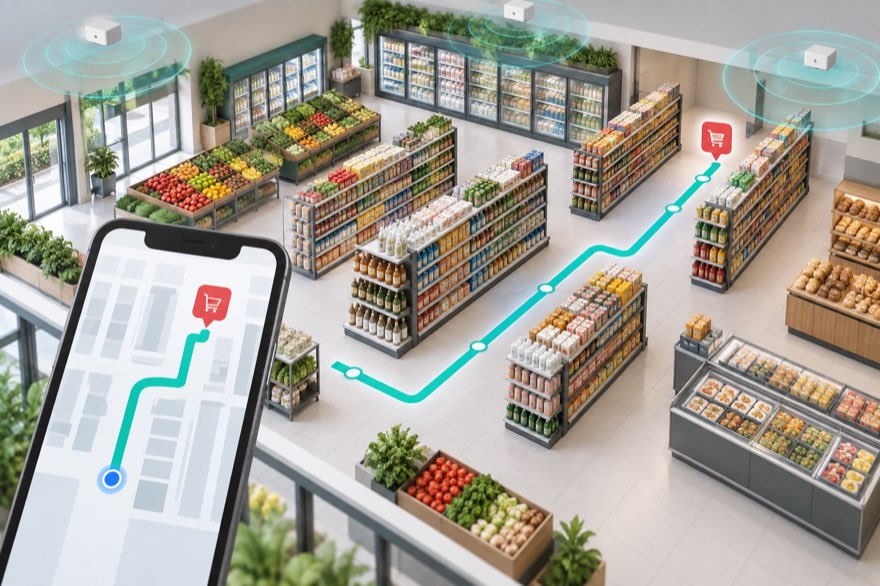
Search for a product or store → show current position → navigate to a shelf or entrance → trigger consented zone services. Integrate product/store POIs, an indoor route graph and the customer app.
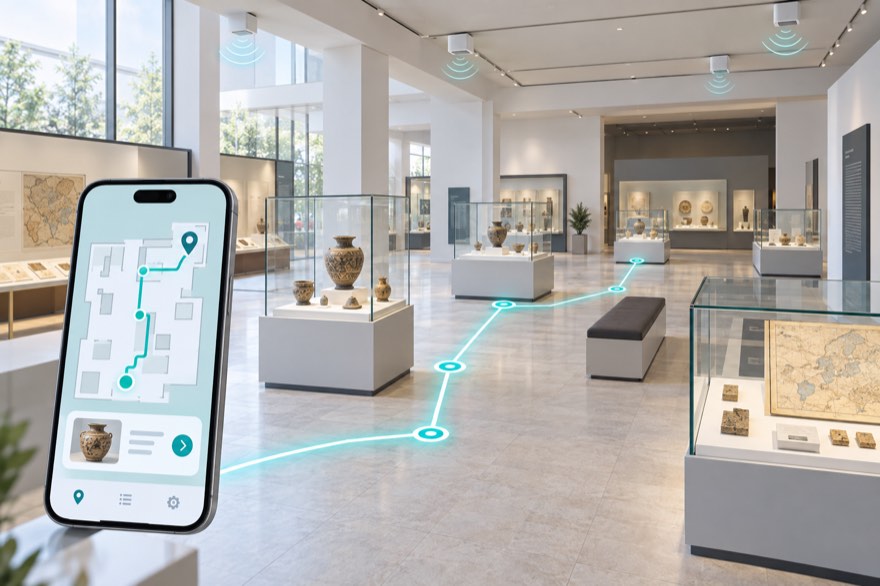
Select a route → play the relevant content near an exhibit → stop repeated triggers after leaving. Combine position quality, dwell time and entry/exit thresholds to reduce adjacent-exhibit misfires.
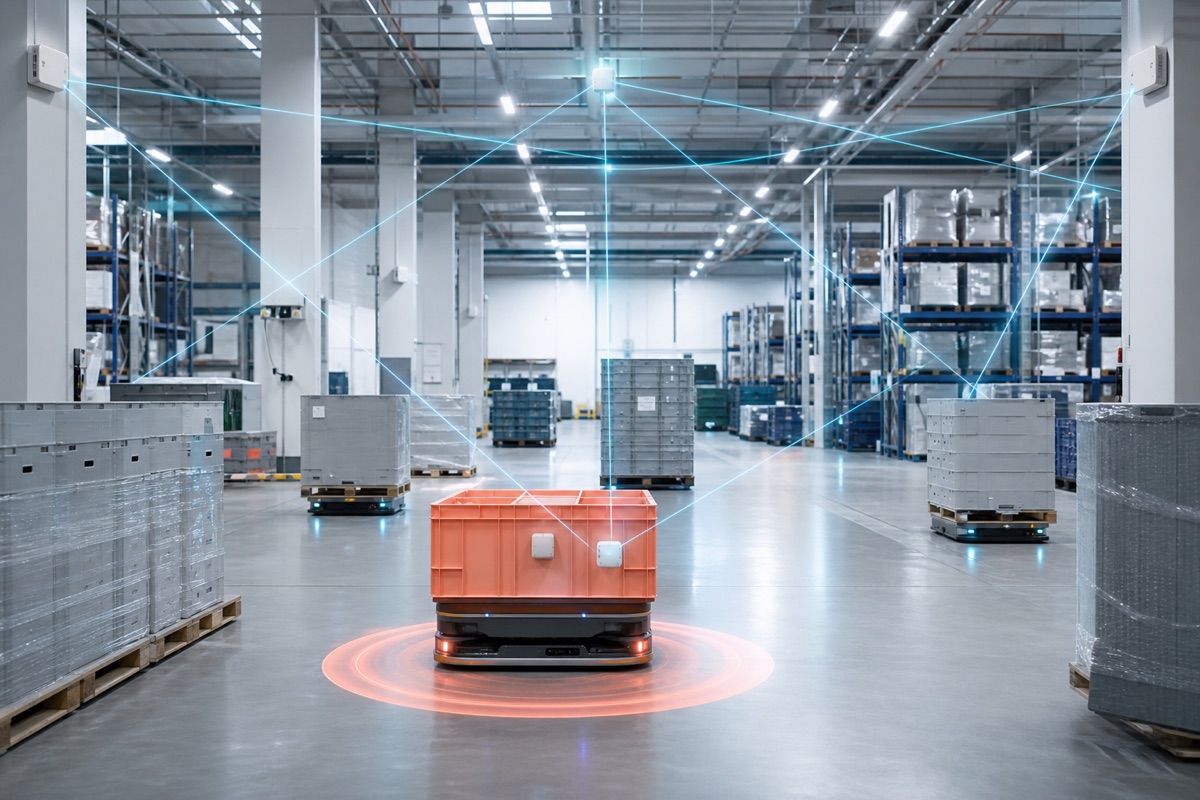
Manage pallets, tools and vehicles with UL-TDoA tags; compatible phones help staff find assets or receive zone alerts. Align both in site coordinates and connect authorized data to WMS, MES or the customer platform.
Start with a single-zone kit to validate target phones, geometry and workflows, then scale from the site plan. Final BOM, enclosure, certification, interfaces and targets follow project review.
Anchors plus broadcast and synchronization firmware for a single-zone prototype.
Configure networks, coordinates, status checks and project parameters.
Evaluate APIs, permissions and position output for iOS 27 and Android 17.
Placement guidance, walk-test methods and project acceptance templates.
A Pinpoint prototype-kit sheet hosted in FiRa's resource library reports the figures below. They describe that vendor's kit, not a FiRa-wide performance guarantee or Feirui measurements. Use them for evaluation context, not Feirui acceptance criteria.
Use the kit to confirm phone/tag compatibility, anchor geometry and the workflow. Before deployment, agree accuracy, availability, latency and capacity acceptance for the target site.
Record models, OS, permissions and regional configuration.
Record placement, coverage, blockage and edge zones.
Walk-test error, latency, availability and recovery.
Practical answers about phones, integration, deployment, privacy and acceptance.
An integrated UWB phone can receive DL-TDoA without a separate tag. Fixed anchors transmit; the phone receives and participates in local positioning. Compatible anchors, coordinates and maps are still required. Central asset tracking typically uses a separate UL-TDoA tag path.
No. Hardware, exposed measurement modes, app permission, firmware and anchor configuration must align. The iPhone, Pixel and Galaxy examples above are official hardware or general-UWB references. Feirui has not published a validated-device list.
On Apple, inspect NISession.deviceCapabilities.supportsDLTDOAMeasurement and request location authorization. From iOS 27 no DL-TDoA entitlement is required, but permission is. On Android 17, check isDlTdoaSupported() through RangingManager and request fine location; background use adds permission and OS constraints.
This approach uses native app or SDK integration with OS DL-TDoA capabilities, then maps, POIs and business logic. A web map does not establish browser access to UWB. Platform-specific OOB discovery and configuration can use BLE or Wi-Fi.
The 30 cm and 4 Hz figures describe the attributed third-party kit, not a Feirui guarantee. Record phone, OS build, firmware, anchor coordinates and LOS/blockage conditions, then measure P50/P95 error, availability, update rate and end-to-end latency. Shelves, people, walls and geometry can affect results.
Receiving devices do not each transmit UWB positioning messages, which helps broadcast infrastructure scale. This is not unlimited end-to-end capacity: discovery, OOB setup, coexistence, apps and backend services still need peak-load tests.
FiRa untracked navigation allows local positioning without UWB positioning transmissions from the receiving device. Uploading trajectories, arrival events or analytics is a separate app decision requiring clear notice and appropriate consent; local calculation does not mean an entire app collects no data.
Feirui's four-node kit is a single-zone prototype starting point, not an arbitrary-area or 3D-performance guarantee. Production counts depend on 2D/3D needs, geometry, height, blockage, transitions and redundancy. Define coordinate surveying and synchronization before deployment.
UWB measurement and local solving need not request coordinates from the cloud every time. Offline maps, login, OOB setup and services depend on app design. Phone DL and asset UL data can share site coordinates and authorized WMS/MES integration; dual anchor roles still require explicit design.
No. Check the specific product's certification, DL-TDoA roles and features, phone API, firmware and RF configuration. Chip certification does not automatically certify a Feirui end product or prove all-phone compatibility. Start with a site plan, target devices and OS builds, region, accuracy/rate needs and mounting constraints.