Horizontal direction finding
360° / Optional FU50RB configuration, not omnidirectional coverage for every module
UWB ranging/direction, IMU motion data and robot control interfaces enable live following, trajectory replay and LR‑WiFi remote operation.
360° / Optional FU50RB configuration, not omnidirectional coverage for every module
Range / azimuth / elevation / FU400 3D configuration; 2D modules do not output elevation
UART / SPI / GPIO / FU50RB reference; motion control and obstacle avoidance belong to the host
2.8–3.6 V / 3.3 V typical; module size 49 × 47 × 10 mm
A UWB phone or wearable tag identifies the target and supplies relative position. The robot combines range, direction and motion states to produce a stable following target, using 2D AOA, 3D AOA or 360-degree direction-finding configurations as required.
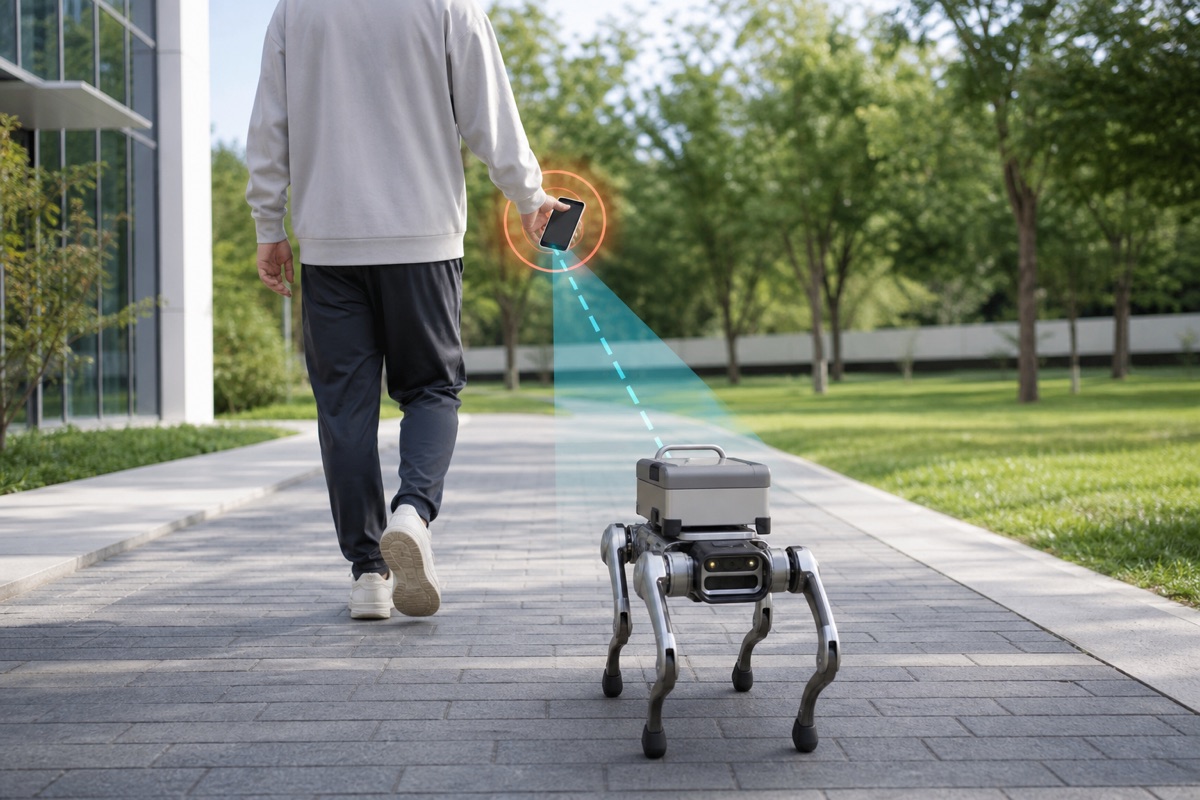
Supports compatible UWB phones and dedicated UWB tags, confirmed per project.
2D, 3D and 360-degree options fit robot dogs, vehicles and appliances.
SDK, serial or project interfaces provide target and status data to motion control.
Products can combine live following, trajectory replay, long-range manual takeover and waypoint tasks. Identity, positioning and status data are shared, while safety and motion control remain the responsibility of the complete machine.
Continuous range and direction outputs support speed, distance and follow-zone policies.
Relative target motion is recorded, filtered and transformed for motion control.
LR‑WiFi provides a long-range link direction for control, video or telemetry.
On signal loss, boundary breach or fault, the machine can slow, hold or recover per system policy.
UWB constrains relative range and direction while IMU contributes short-term motion. Fusion creates a continuous path that can be passed to the robot controller after a person walks around a planter, shelf or obstacle. Trajectory following is not obstacle perception: the complete machine still needs vision, LiDAR, ultrasonic or other sensors for real-time obstacle detection and safety decisions.
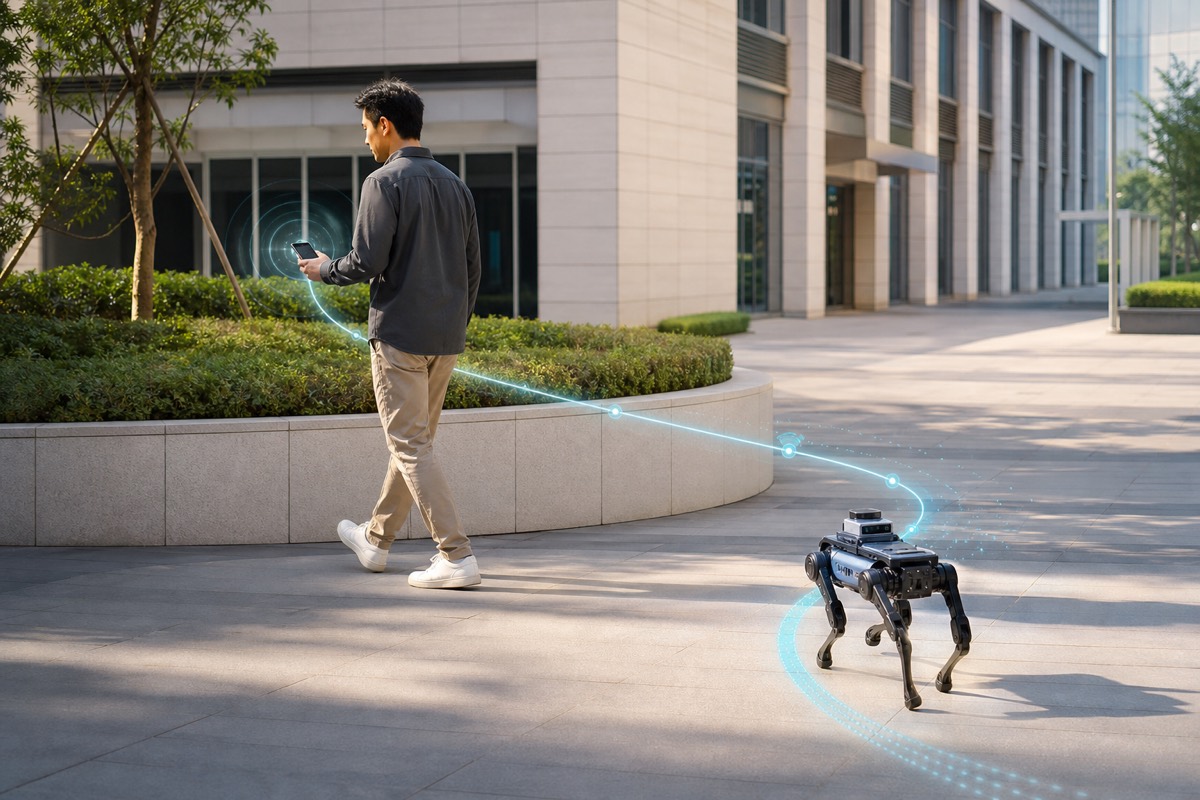
Align UWB and IMU samples to reduce trajectory offset.
Output relative path, heading and confidence in the project coordinate frame.
A configurable path window supports smooth tracking and corner handling.
In permitted bands, line-of-sight conditions and with suitable antennas and link budget, LR‑WiFi can target remote-control distances beyond 1 km and carry telemetry or low-bitrate video. Actual range, throughput, latency, transmit power and band compliance must be validated for the region, antenna installation and site interference.
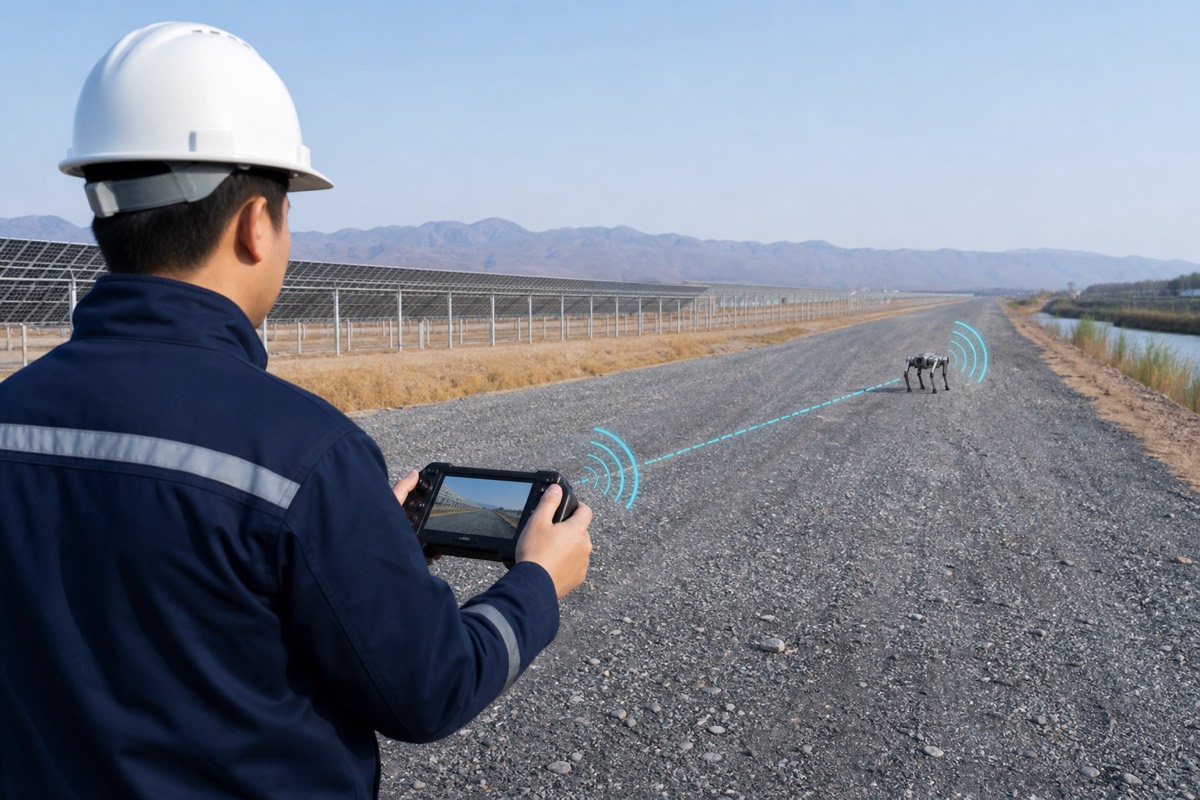
Carry mode, speed, direction, hold and safety commands.
Return battery, link, mission and fault states.
Can coordinate with short-range UWB, cellular or other links as required.
Feirui can provide UWB modules, antenna/RF support, positioning and fusion algorithms, SDKs and reference designs. The customer system owns mechanics, powertrain, environmental perception, safety certification and final motion policy. Interfaces, coordinates, update rates, failure policies and test conditions are confirmed during evaluation.
Validation covers phone/tag compatibility, antenna and body blockage, follow distance, update rate, corner stability, path error, link switching, loss-of-link policy and site interference. Capabilities shown here are solution directions; committed targets follow mutually agreed test conditions and acceptance records.
Machine structure, target site, speed/range, interfaces and regulatory region.
Selection, antenna review, SDK/algorithm interfaces, demo and test records.
Calibration, production test, consistency, traceability and versioning.